
Deca Durabolin (Nandrolone) is considered the most popular anabolic steroid for those who were active steroid users during the 80’s and 90’s. It has been slowly dropping out of favor among the younger crowd, but if you ask any 50-something at your gym they will have a lot of good things to say about it. Today it is used, most improperly, by users who are looking for mass and strength gains or joint relief.
Table of Contents
Past history
Medical Uses
Deca Durabolin (Nandrolone) came around during the late 1950’s. Over the years since, medical benefits of muscle wasting prevention in those with cancer, burns, or immune suppression has been replaced by more modern drugs. Studies have shown it is effective for bone issues, anemia, certain estrogenic related cancers, boosting appetite, and also a boost in red blood cells. Surprisingly a sulfate version of the steroid has been used in some eye medications.
Containing a chemical structure similar to testosterone, nandrolone has a higher myotrophic: androgenic ratio resulting in improved effects on muscle mass. Animal models have suggested application in the improvement of joint healing following rotator cuff repair.
Bodybuilding Uses
During the 70’s and 80’s bodybuilders started abusing Deca Durabolin (Nandrolone) thanks to it having lower side effects than straight Testosterone. It became one of the most popular steroids in this era by those who were competing or those who were simply gym rats. During the 90’s it hit popularity highs and has since slowly been falling out of favor due to changes in the current generations goals of going for leanness instead of bigger and also general misuse of the steroid.
Background tidbits
Where To Buy
Deca Durabolin (Nandrolone) anabolic to androgenic ratio is 125:37, making it a very mild steroid which has 2/3rds less androgenic effects than Testosterone. The steroid is not expensive or hard to find and usually comes in 200mg/ml vials or ampules.
Half Life
It has 2 forms of delivery, one being the Nandrolone Phenylpropionate (NPP) ester and the more common Nandrolone Decanoate (Deca) ester. The difference between the two is the half-lives which are about 4 days for NPP and 14 days for Deca.
Detection Time
Finally, you should remember it has an 18 month detection time, which makes it a horrible steroid to use if you are a tested athlete. Shawn Merriman (former NFL player) was busted for using it and suspended.
The science behind how it works
The 19th Atom
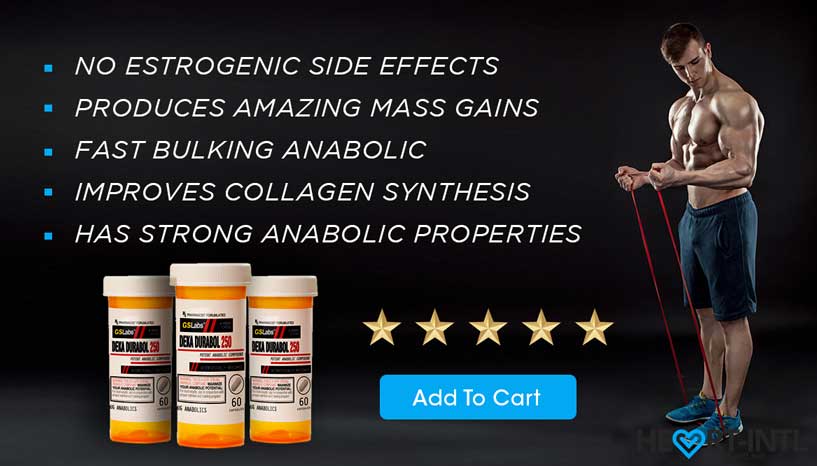
Deca Durabolin (Nandrolone) is a 19nortestosterone type of steroid, which means that it lacks the 19th position atom. It is not only far less androgenic than testosterone, as mentioned earlier, but it also is far less estrogenic. In fact, it only aromatizes 1/4th of the rate that testosterone does.
Protein Synthesis
It will cause a rise in protein synthesis, muscle building hormones, and halt the muscle eating catabolic hormones. One of the other things it does very well is increasing nitrogen retention in the muscles, so your muscles feel more fuller on it and seem to recover faster.
Collagen Synthesis
A unique trait of Deca Durabolin (Nandrolone) is that it has been shown in studies to boost collagen synthesis (which is the opposite of other steroids). This means you will get a big boost in your joints and soft tissues while using it.
Side effects
Do I need an AI?
The side effects of Deca Durabolin (Nandrolone) are actually quite low. As mentioned above it aromatizes way less and is much less androgenic than Testosterone so those specific side effects are not as much as a concern. However, you should still remember it is a very powerful hormone and you should keep an aromatase inhibitor on hand while using it.
Deca Dick
The big side effect that scares people away is the dreaded ‘Deca-dick’. This means your penis can experience erection dysfunction while on it if you do not run it properly. The reason this occurs is actually very simple and not what most people believe. You see Deca Durabolin (Nandrolone) does a great job of binding to DHT (dihydrotestosterone) receptors, that is part of the reason it has such low side effects and won’t do things like shed head hair or enlarge the prostate. This comes at a cost, however, and that particular hormone is what gives men our sexual aggression. So the simple way to offset this problem is always to use a DHT (dihydrotestosterone) derivative such as Proviron.
Suppression
Like all anabolic steroids it is suppressive, so a full post cycle therapy is needed. You also should use support supplements as well.
How to use
You should not use Deca Durabolin (Nandrolone) by itself. You can get great results on 300-500mgs per week, but you still need to stack in 25mgs of Proviron a day with it.
My Favorite Stack
Some users will add in an androgenic steroid (Testosterone, Anadrol, Dianabol, Trenbolone) to give the cycle a kick. You have several options with that. My personal favorite is stacking 200mgs a week Trenbolone with 400mgs a week of Deca Durabolin (Nandrolone).
Joint Support Stack
Those who want joint help can use it along with Ostarine (ostabolic MK2866) and human growth hormone.
Cycle Length
The length of the cycle should never exceed 16 weeks if the user wants to have the best chance of recovering their natural hormones.
Female use
Females have historically used Deca Durabolin (Nandrolone) at dosages of around 50mgs a week.
User results
Enhance Mood
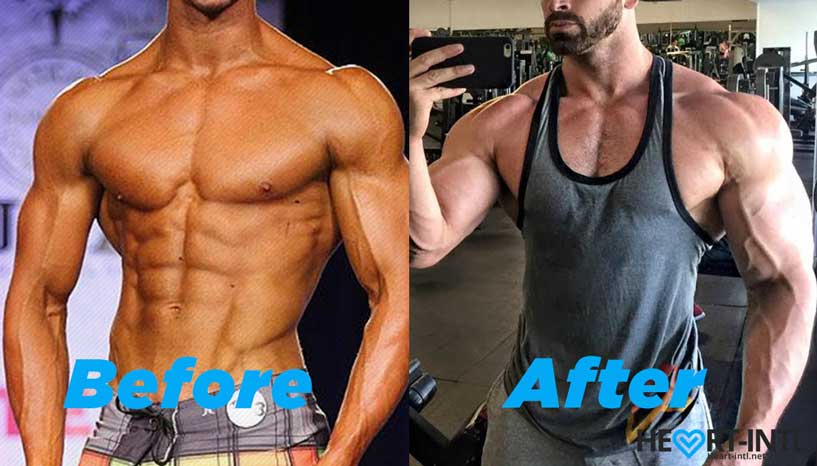
Users love Deca Durabolin (Nandrolone) because of the way it makes them feel. They swear their mood improves a lot on it since it is similar to using Testosterone but without the androgenic side effects. So you can enjoy the benefits of steroids without feeling moody or angry all the time.
Boost Appetite
Another nice thing it does is boosts appetite. I personally found myself having to order 2 entrees when I went out to restaurants and waking up very hungry every day. This can be a blessing for those who have a hard time bulking.
Cushion Joints
Powerlifters love this steroid for its ability to cushion their joints while they lift heavy weights. They say it helps them stay healthier too, but be careful because when you come off you may find yourself more injured than before.
Conclusion
All in all Deca Durabolin (Nandrolone) is a great option for those who want to build mass and strength while limiting side effects.
Deca Durabolin Review
-
Support Joints
-
Quality Muscle Mass Gains
-
Boost Appetite





)