
While SARMS have always been touted as the risk-free, alternative to anabolic steroids, there is a lot of skepticism, especially among old-school bodybuilders who cite lack of research as a reason to trash the claims made by SARM-proponents.
We agree. There’s less research done on SARMS and the long term effects on the body are yet to be studied.
But whatever is known so far, looks way better than using steroids, especially in case of some of the more popular SARMS like Ostarine, Ligandrol and BMS-564.
However, one of the most effective and widely used ones, seems to have fallen out of favor recently. We are talking about S4 or Ardarine.
A few years ago, when we were just starting off with SARMS, S4 was all over the place. Anyone who wanted to do SARMS was doing S4. Either standalone or stacking it with the other big three.
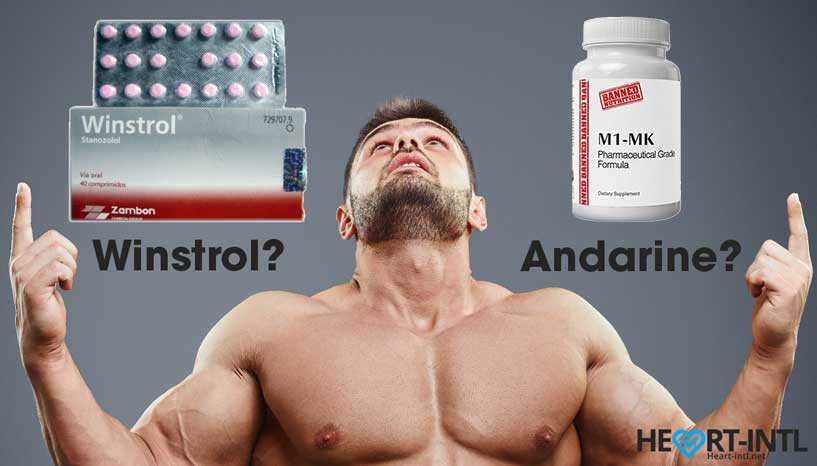
At its peak, S4 was considered to be the risk-free alternative to Winstrol.
Cut to today, most people are petrified of using it because of the that is believed to cause permanent vision changes.
So, we figured that this was the right time to add our two cents to the discussion and give our review on this highly effective and slightly misunderstood SARM.
Table of Contents
What is S4?
S4 is a SARM that was discovered by GTX labs as a possible therapeutic remedy for a host of conditions including muscle loss. However, it is the effectiveness of the drug in the treatment of benign prostatic hypertrophy that bought it into the spotlight.
Like most other SARMS, S4 is orally bioavailable and an active partial agonist for selected androgen receptors and helps in boosting lean muscle mass and in faster oxidation of stored fat.
In simple terms, it is anabolic and partially androgenic like testosterone but with minimal side effects.
We say minimal because at large doses and cycles, it can cause suppression and it can even enlarge your prostate. And then the vision problems start to outweigh the benefits.
However, most of the sides are reversible and with a recommended dose and proper PCT. You should be able to achieve excellent results with it without the nasties.
How to use S4?
There are numerous theories floating around on the best practice with S4 doses.
However, coming from personal experience and from tons of anecdotal incidents, we recommend that you start with a minimum dose of 20mg/day and then work your way up, keeping an eye on the sides as you go.
The maximum upper dose limit that we recommend is 50mg/day for not more than five days a week.
If you lift for five days, use it on those days only and stay off the S4 for two days no matter what contradictory information you read online from self-proclaimed SARM gurus.
Want to avoid sides? Fly low!
The drug has a very short half-life of about two and half hours. So, you can split the total dose into three timed doses in a day.
There will be suppression and a PCT is highly recommended after a four to six-week cycle with S4.

What can you expect after using S4?
We still feel that S4 is the Winstrol of the SARM world.
That’s what makes this such an effective drug to add to a stack irrespective of what you are trying to achieve.
The first clinical trial reported an average gain of 3.3 lbs of lean muscle mass in a 90-day period. This was at ridiculously low doses. If you are on a bulking cycle, it will reduce bloat and make your gains look rock hard, ripped and vascular.
If you are cutting, you will look like you have been on a Var and Winny cycle for weeks. Also, S4 helps in oxidizing stored fat while protecting your hard earned muscle.
Be prepared for strength gains that will break your lifting thresholds. Personal bests have been achieved by almost every athlete who has cycled S4.
The selective androgenic effects mean that there is zero effect on your cardiac muscles. Your cholesterol levels are not elevated and your liver values remain constant throughout the cycle.
It is a very powerful compound indeed and one that you should be using if you are serious about your gains and about using SARMS.
One of the tests conducted by an athlete has revealed that S4 is very effective in preventing Gynecomastia. So, if you are experiencing bitch tits caused due to steroid use, adding S4 to your stack might help negate this effect.
Is it completely safe for use?
At 50mg/day, most people experience zero to mild side effects. The most notable ones that are experienced at higher doses are responsible for the bad rap that S4 has gotten in recent times. There are two in particular.
- Yellow tint to the vision: Some people seem to develop this side effect sooner than others. There’s a yellow tint to the vision that can fluctuate depending on the ambient lighting. At times, it is more pronounced. Most people who have reported this side effect have dosed S4 at more than 50mg/day.
- Night vision: Some users report that they have difficulty adjusting to night vision. So, when they go from a brightly lit place to a dark one, they experience temporary blindness, for about 3-4 seconds.
Both these sides are temporary and will fade as soon as you stop using S4. If you experience any of these and it becomes bothersome, just stay off the drug for a day or two. Even better, use the 5-2 dosing protocol.
Where can I buy authentic S4?
Due to the decreased demand and the bad rap that the drug has received, most manufacturers have stopped selling S4.
A lot of them are also petrified about the new bill that the congress has introduced.
One of the only manufacturers who still has authentic S4 for sale is Banned Nutrition.
-
Lean Muscle Mass Gain
-
Fat Loss Acceleration
-
Strength Gain





 Review)