
Much before poking steroid injections into your arse and proudly posting videos of the same on YouTube went mainstream, there were oral steroids.
Innocuous looking pills that you could store in your gym bag and pop routinely while you went about crushing your thresholds.
Anadrol was one of them.
At its peak, it was amongst the most widely used steroidal drugs by bodybuilders and gym rats.
Especially when it was discovered that some men could gain up to 1 lbs. per day while using it.
Picture running an Anadrol cycle for 6 weeks. How many pounds do you gain?
Before you drool all over the keyboard, there’s more to it than the weight gains though.
Anabol is also touted to be one of the most hepatotoxic steroids ever.
But as made out from anecdotal evidence and instances, some of those sides may be a little exaggerated.
Nevertheless, if you are interested to know more about Anadrol or the A-Bomb, then you are at the right place.

Table of Contents
What is Anadrol?
Anadrol, drug name Oxymetholone, is a 17aa (17-Alpha-Alkylated steroid) oral steroid that is derived from DHT.
17aa indicates a carbon position alteration that allows the drug to make it through the liver unaffected, still in a form that’s useful for the body.
It was originally created for the treatment of Anemia but quickly caught on as an effective weight gainer in patients with terminal illness related wasting.
The real effects though came to the fore when bodybuilders started to add it to their stacks resulting in insane gains.
That’s the big draw of Anadrol. It allows you to gain weight and it does it fast.
Unlike most steroids, even testosterone which takes at least a few weeks to kick-in, Anadrol will start to move the weighing scale from the fifth day onwards.
Within two weeks, you should have gained close to 10 lbs in ideal circumstances. Up that to 30 lbs. in six weeks.
But as is the case with any fast weight gain, a lot of that is water weight. And therein lies the problem with the steroid.
Nevertheless, anything as powerful as Anadrol has its place in a steroid cycle. You just need to know how to use it correctly.
How to use Anadrol
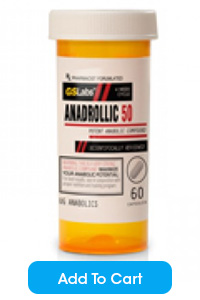
Anadrol is available in a pill form and the lowest available dose is 50 mg.
That’s the minimum recommended dose as well.
One 50 mg tablet a day for 6 weeks to gain excellent results.
If you up that dose to 100mg/day, the results will be amplified but so will the risk of sides.
Bro science and amateurs on internet forums might recommend doses as high as 150mg/day.
But Anadrol is one of the few steroids where the dose related curve becomes flat at high doses.
So, if you increase your dose from 100mg/day to say 150mg/day, the effects are not as pronounced. The toxicity though increases dramatically.
This means that you can stick to the 50mg/day to 100mg/day dose to gain some movement.

What are the effects of Anadrol?
As we briefly mentioned earlier, Anadrol is a quick mass gainer and is often included in a steroid cycle at the beginning to jumpstart the gains while the slower acting steroids start to kick in.
Bulking:
Let’s say you are using Testosterone Propionate for 12 weeks. That’s a very basic beginners cycle with a reasonably fast acting ester. But it would still take at least four weeks for the effects of the test to kick in.
Add Anadrol 50mg/day to the first four weeks of that cycle and you will experience tremendous gains in strength and muscle mass. You can easily gain up to a pound of weight per day for the first two weeks at least. Lift heavy and eat like a beast, you can gain more.
At least some of the weight that you gain will taper off as you cease using Anadrol. But by that time, the test will kick-in giving you an excellent foundation to work with.
Anadrol is a pure bulking supplement. It has an anabolic to androgenic ratio of 320:45.
So, it’s 3.2 times more anabolic than testosterone but less androgenic.
Strength gains:
Anadrol is frequently used by strongmen and power lifters who do not have to adhere to any weight class. That’s because it can skyrocket your strength gains. Some users who doubled their dose of Anadrol reported some serious increase in their strength.
Increasing Free Testosterone:
Another amazing effect that it has is to lower the levels of Sex Hormone Binding Globulin which in turn increases the amount of free testosterone in your body. The result? Your body is in a more anabolic state.
What are the side effects of Anadrol?
It goes without saying that any compound that produces results as dramatic as this comes with a bunch of tradeoffs.
Let’s start with the one that’s most concerning.
- Liver Toxicity: Anadrol is extremely toxic to your liver. So much so that any dose that extends for more than 6-weeks is considered to be not worth the risk. You’d have to follow a strict liver supplementation routine or use an all-in-one cycle support product such as N2guard while you are using the drug. That includes TUDCA & Milk Thistle. But can include other supplements too. Keep an eye on your liver values all the time.
- Blood Pressure: A lot of the weight that you gain while you are on Anadrol is in fact water weight. And when your body retains water, it increases your risk of blood pressure. But if you are not predisposed to high blood pressure then a lot of the damage caused due to it can be mitigated with medication.
- Headaches: Anadrol is known to cause the worst headaches that you might have ever experienced. Skull crushers as people call them. And being so taxing on the liver, your options with NSAIDS are close to zilch.
- Shutdown: Anything that’s 3.2 times more anabolic than test is going to shut you down. Follow a regular PCT while you are on Anadrol.
- Estrogenic sides: Despite being a DHT derived steroidal drug (does not aromatize or cause progestin related sides), Anadrol is known to stimulate the estrogen receptor. Letrozole is an excellent drug to use to combat the estrogenic sides and also some of the bloating that it causes.
To sum it up
Anadrol is an excellent steroid to add to a stack provided you know what you are dealing with. It works best as a jump starter to a normal steroid cycle with Testosterone or any other stack that you are using.
And the most concerning part about using it is the liver toxicity.
Anadrol (Oxymetholone) Review
-
Strength Gains
-
Muscle Mass Gains
-
Boost Free Testosterone




)